Driving Development: F1 Relevance to Road Vehicles
1/9/20263 min read
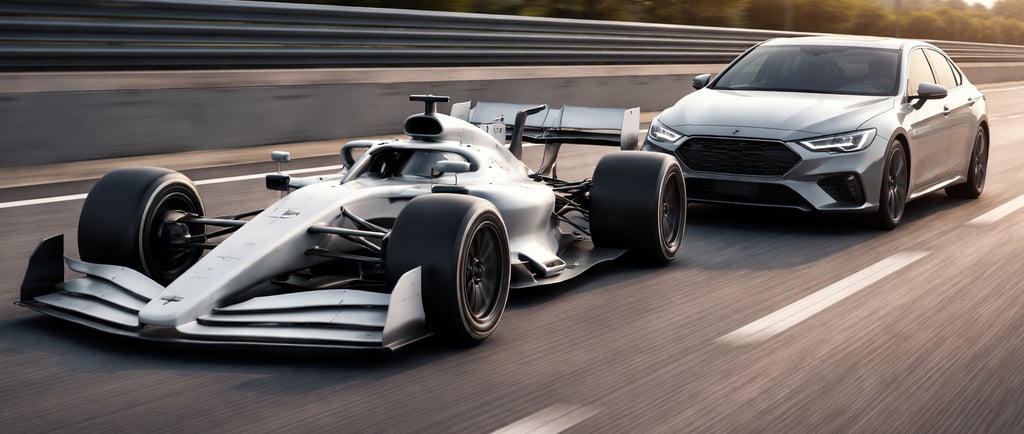
The upcoming Formula One regulations set to take effect in 2026 are being discussed primarily in terms of racing spectacle and competitive balance, but their broader significance extends well beyond the track. Historically, Formula One has functioned as a high speed laboratory for automotive innovation, and the next regulatory era is poised to influence the technologies that will eventually shape everyday road vehicles, including those driven by Canadians.
At the centre of the 2026 framework is a rebalancing of power between the internal combustion engine and electrification. The new power units will draw roughly 50 percent of their output from electrical energy, a substantial increase from current systems. Equally important is the move toward fully sustainable fuels, designed to be carbon neutral by capturing or offsetting the emissions produced during combustion.
This combination reflects a growing industry reality: the future of mobility is unlikely to be defined by a single technology. Instead, it will involve a sophisticated blend of electrification, cleaner combustion, and advanced energy recovery. For road car manufacturers navigating uncertain regulatory environments and uneven charging infrastructure, this hybridized approach offers a practical blueprint.
Canada provides a particularly relevant backdrop for this evolution. While EV adoption is accelerating, the country’s vast geography, cold climate, and uneven charging networks continue to present challenges for fully electric transportation, especially outside major urban corridors. Technologies that improve efficiency without relying exclusively on battery range could materially enhance vehicle performance in real world Canadian conditions.
One of the most consequential aspects of the 2026 regulations is the emphasis on energy efficiency. Engineers are being tasked with extracting more usable power from smaller amounts of fuel while minimizing waste. Advanced thermal management systems, lighter materials, and next generation battery designs developed under the extreme constraints of Formula One often cascade into consumer vehicles within a decade.
Energy recovery systems are a clear example. Originally refined in motorsport, regenerative braking is now commonplace in hybrids and EVs, helping extend range and reduce overall energy consumption. The next generation of F1 systems will be even more sophisticated, capable of harvesting greater amounts of energy during braking and redeploying it with precision. As these technologies mature, drivers can expect more responsive vehicles that waste less energy in everyday traffic.
The introduction of sustainable fuels may prove equally transformative. Unlike conventional fossil fuels, these alternatives are engineered to reduce lifecycle carbon emissions without requiring a wholesale redesign of existing engine architectures. For a country like Canada, where millions of internal combustion vehicles will remain on the road for years to come, the ability to lower emissions from the current fleet represents a meaningful opportunity. Rather than framing the transition as a binary shift from gasoline to electric, sustainable fuels introduce a pathway that can complement electrification.
There is also a strategic dimension to consider. Automakers invest in Formula One not only for brand visibility but for accelerated research and development. The compressed innovation cycle of motorsport forces breakthroughs that would otherwise take far longer to achieve. As cost caps and standardized components push teams to innovate more efficiently, the lessons learned increasingly align with the commercial pressures facing mass market manufacturers.
Critics occasionally question whether racing technology truly translates to consumer benefit, yet history suggests otherwise. Disc brakes, semi automatic gearboxes, advanced aerodynamics, and modern hybrid systems all owe part of their lineage to motorsport experimentation. The 2026 regulations signal that the next wave of transferable innovation will centre on efficiency, sustainability, and intelligent energy use.
None of this implies that Formula One alone will determine the future of road transport. Policy, consumer behaviour, and infrastructure investment will ultimately shape adoption curves. However, F1 remains uniquely positioned to demonstrate what is technically possible when performance and sustainability are pursued simultaneously.
For Canadian drivers, the relevance is straightforward. Vehicles inspired by these advancements are likely to be more efficient in harsh winters, less carbon intensive over their lifecycle, and better optimized for long distance travel. In that sense, the 2026 regulations are not just about faster lap times. They represent a preview of a more adaptable automotive future, one defined less by technological absolutism and more by integrated solutions designed to perform in the real world.