Driving Development: EV's vs Hybreds
6/20/20252 min read
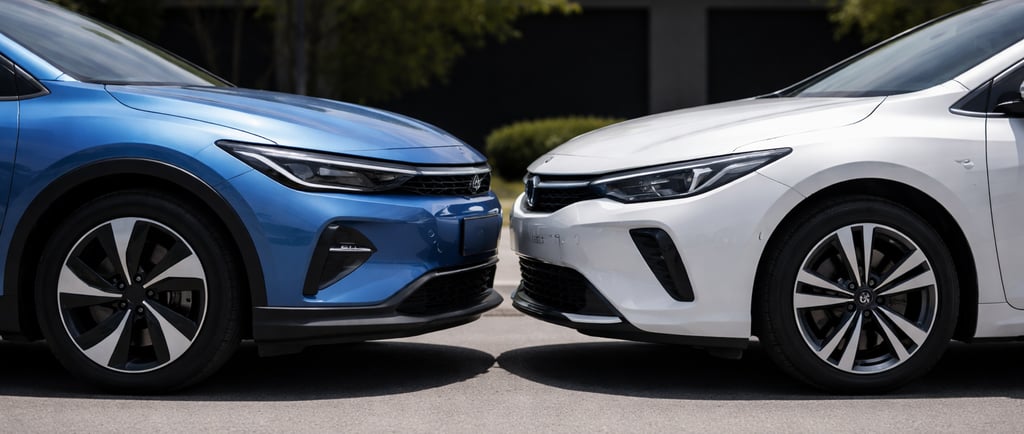
Toyota Chairman Akio Toyoda’s recent claim that one electric vehicle can generate the same emissions as three hybrids has reignited a debate many assumed was settled. While EVs are widely viewed as central to a lower carbon future, Toyoda’s comments underscore an important reality: environmental impact is highly dependent on how and where a vehicle is built and powered.
Electric vehicles often outperform traditional gasoline cars in lifecycle emissions, and jurisdictions with high EV adoption frequently report improved air quality. However, the comparison becomes more nuanced when hybrids are included. Toyoda referenced Japan’s reliance on thermal power plants, noting that if electricity is largely generated from fossil fuels, the emissions tied to charging millions of EVs can erode their environmental advantage, particularly in the near term. The takeaway is straightforward: an EV powered by coal based electricity is fundamentally different from one charged on hydro, wind, or nuclear energy.
This is especially relevant in Canada, where the electricity mix varies significantly by province. Quebec, British Columbia, and Manitoba benefit from predominantly hydroelectric grids, making EV adoption an immediately effective emissions reduction strategy. In contrast, provinces that still rely partly on natural gas or other fossil fuels face a more gradual pathway to maximizing the environmental benefits of electrification. A national transition must therefore account for regional energy realities rather than assume a uniform outcome.
Hybrids offer an immediate and scalable reduction in fuel consumption without requiring a fully decarbonized grid. From a systems perspective, they function as a practical bridge technology, lowering aggregate emissions while energy infrastructure continues shifting toward renewables.
Toyota’s “multi pathway” strategy reflects this complexity. By investing across hybrids, plug in hybrids, hydrogen fuel cells, more efficient gasoline engines, and EVs, the company is hedging against uneven infrastructure readiness across global markets. Critics sometimes frame this as reluctance, but it can equally be interpreted as pragmatic risk management.
Battery production also carries environmental considerations, including the mining of lithium, nickel, and cobalt. Although supply chains are improving, these impacts remain part of the lifecycle calculation and should not be overlooked in policy or consumer discussions.
None of this suggests EVs are the wrong destination. As electrical grids become cleaner and battery manufacturing advances, electric vehicles are positioned to deliver substantial climate benefits. The question is less about whether electrification should occur and more about how to achieve it responsibly and efficiently.
Toyoda’s argument ultimately encourages a more disciplined conversation about decarbonization. If the objective is measurable emissions reduction, transitional technologies such as hybrids can play a meaningful role today while Canada and other countries continue building the infrastructure required for a fully electric future.